
Mediastinal and thymus conditions
Surgical assessment of masses between the lungs and of the thymus gland.
Draft awaiting medical review · General information; not a substitute for an individual consultation and assessment.
Content updated: 22 October 2026 · Last physician review: not yet completed.
Understanding the area
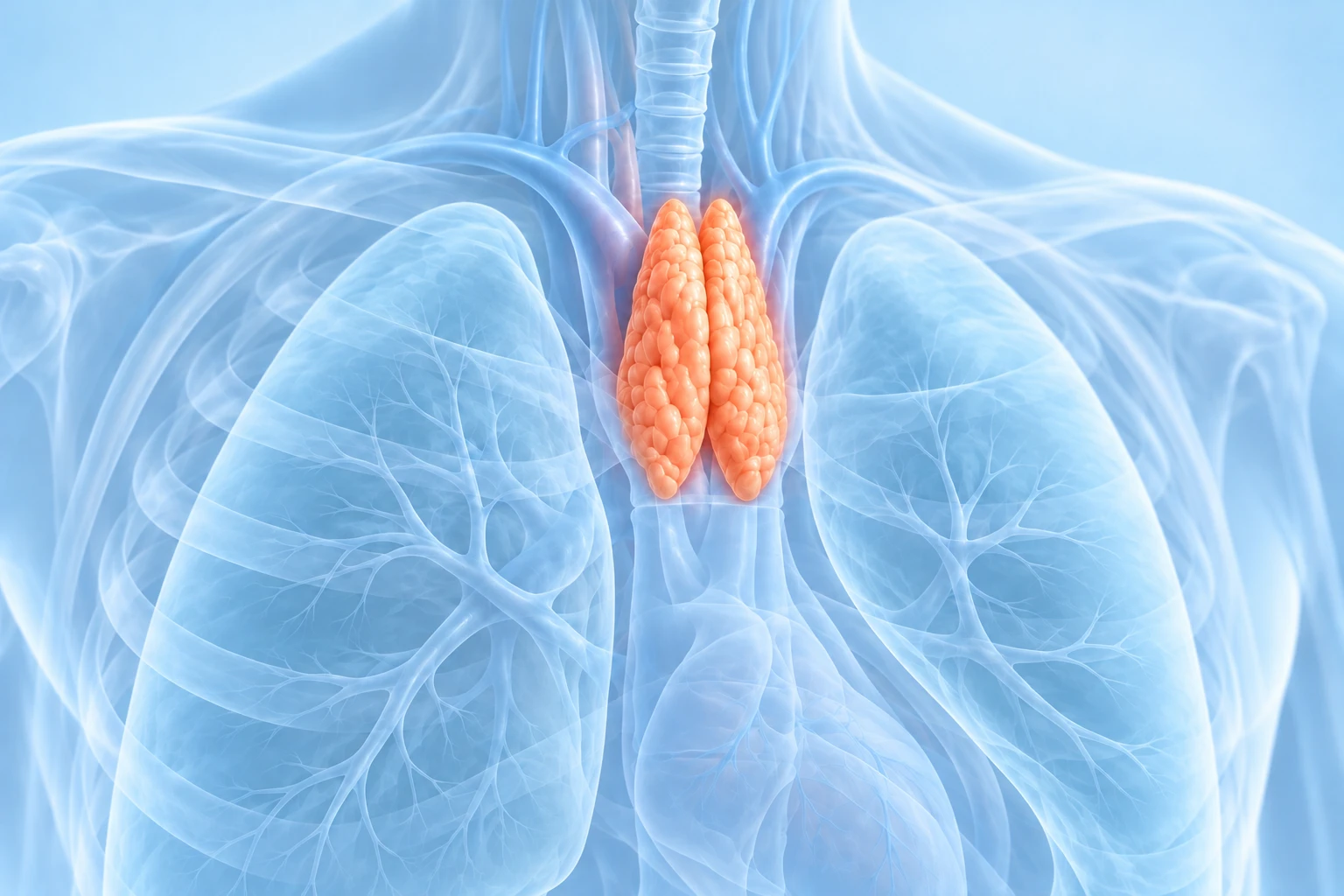
The mediastinum is the space between the lungs; it contains the heart, major blood vessels, windpipe, esophagus and thymus. A mediastinal mass is not a single diagnosis. Cysts, enlarged lymph nodes and different tumors can look similar on imaging. The thymus is an immune system organ behind the breastbone.
Symptoms and investigations
Some masses are found on a CT performed for another reason. Cough, chest pressure or breathlessness may occur. CT shows the mass’s location and relationships to nearby structures; MRI, blood tests or biopsy may be added when needed. Whether a biopsy is required depends on the likely diagnosis and treatment plan.
Thymectomy and myasthenia gravis
Thymectomy is removal of the thymus gland. It may be considered for thymic tumors such as thymoma. Myasthenia gravis affects signals from nerves to muscles and causes muscle weakness. Thymectomy may also be considered in some patients without a thymic tumor; neurology and thoracic surgery teams make this decision together.
Approach, risks and alternatives
The choice between minimally invasive and open surgery relates to the mass’s size and extension into surrounding tissues. Some conditions require medication or radiotherapy instead of, or in addition to, surgery. Bleeding, infection, effects on nearby structures and breathing problems are discussed during consultation.
Follow-up after surgery
Pathology determines further treatment and follow-up. Do not stop medication for myasthenia gravis on your own; the effects of surgery may not appear immediately. Rapidly worsening breathing or swallowing difficulties require emergency assessment.
Frequently asked questions
Is every thymic mass cancer?
No. Benign growths also occur; imaging and, when needed, pathology distinguish them.
Does neurological follow-up end after thymectomy?
No. Medication and muscle strength continue to be monitored; surgery alone does not guarantee immediate recovery.
Further reading
Patient information sources · Sources checked: 22 October 2026. Checking sources does not mean the text has been medically approved by the physician.